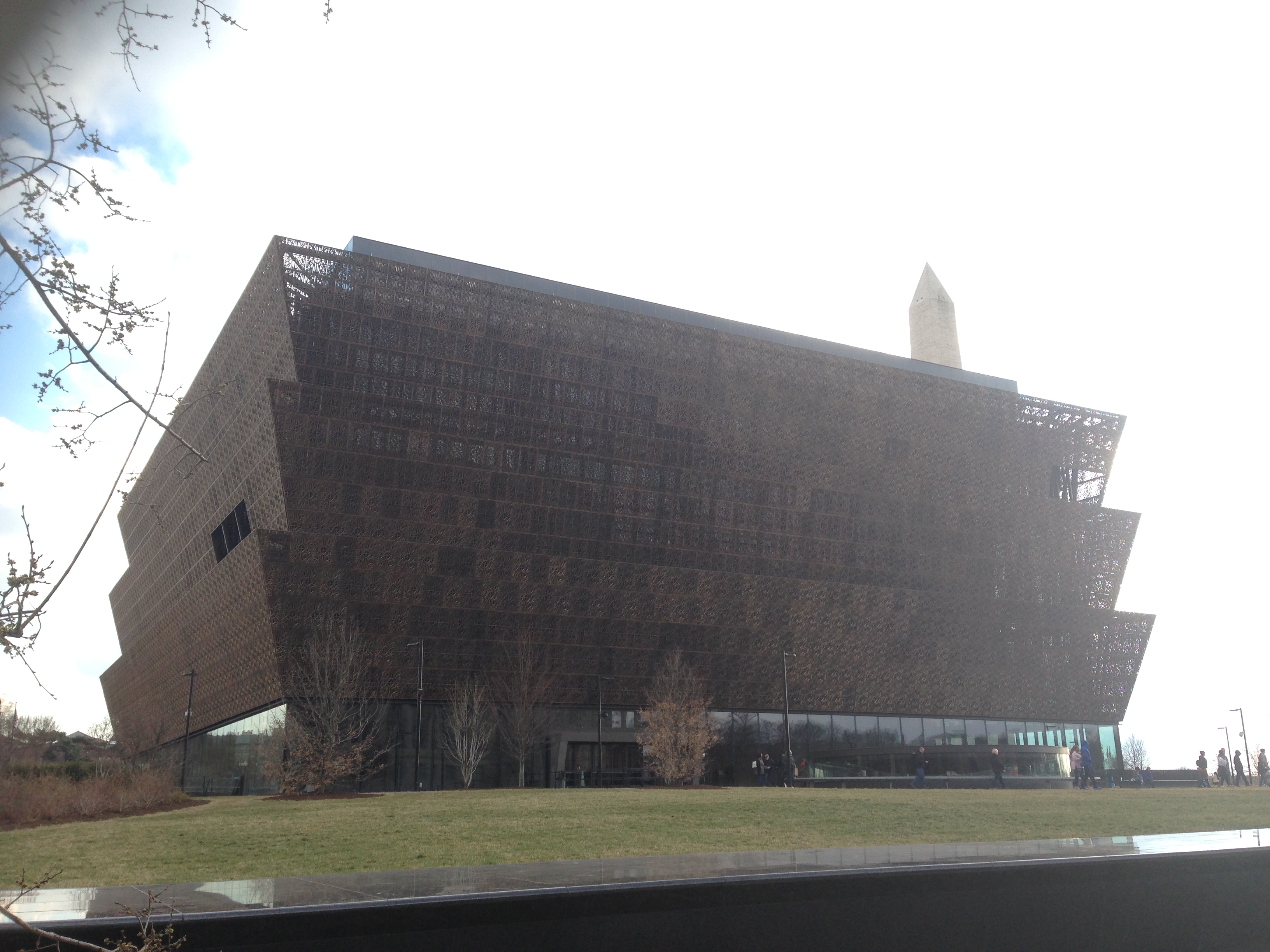
Today was the first day of the seminar, and despite some directional mishaps, it went pretty smoothly! The the theme of our two weeks in D.C. is storytelling. How do museums tell stories? What stories do objects hold? What tools are available to us to create a narrative?
To answer some of these questions, and to take a look at the objects we blogged about in post 2 (read about it here), we headed over to the National Museum of African American History & Culture, or NMAACH. This beautiful museum, which opened in 2016, was designed in such a way that it is evocative of a monument or a memorial. The interior concrete walls have quotes on them, placed high up so you are forced to look upwards and take in the grandeur of the building. I really appreciated that this museum had that element to it, because it made it feel respectful to the difficult stories that are told there.
One of the most powerful design aspects of the museum is the history galleries. Visitors hop in an elevator and are transported down three levels and back in time. You enter into dimly lit galleries that tell the story from the beginning- trade in Africa- and wind your way through three floors that tell the heart wrenching story of people who were taken from their homes, treated worse than livestock, and forced to make their way in a foreign land.
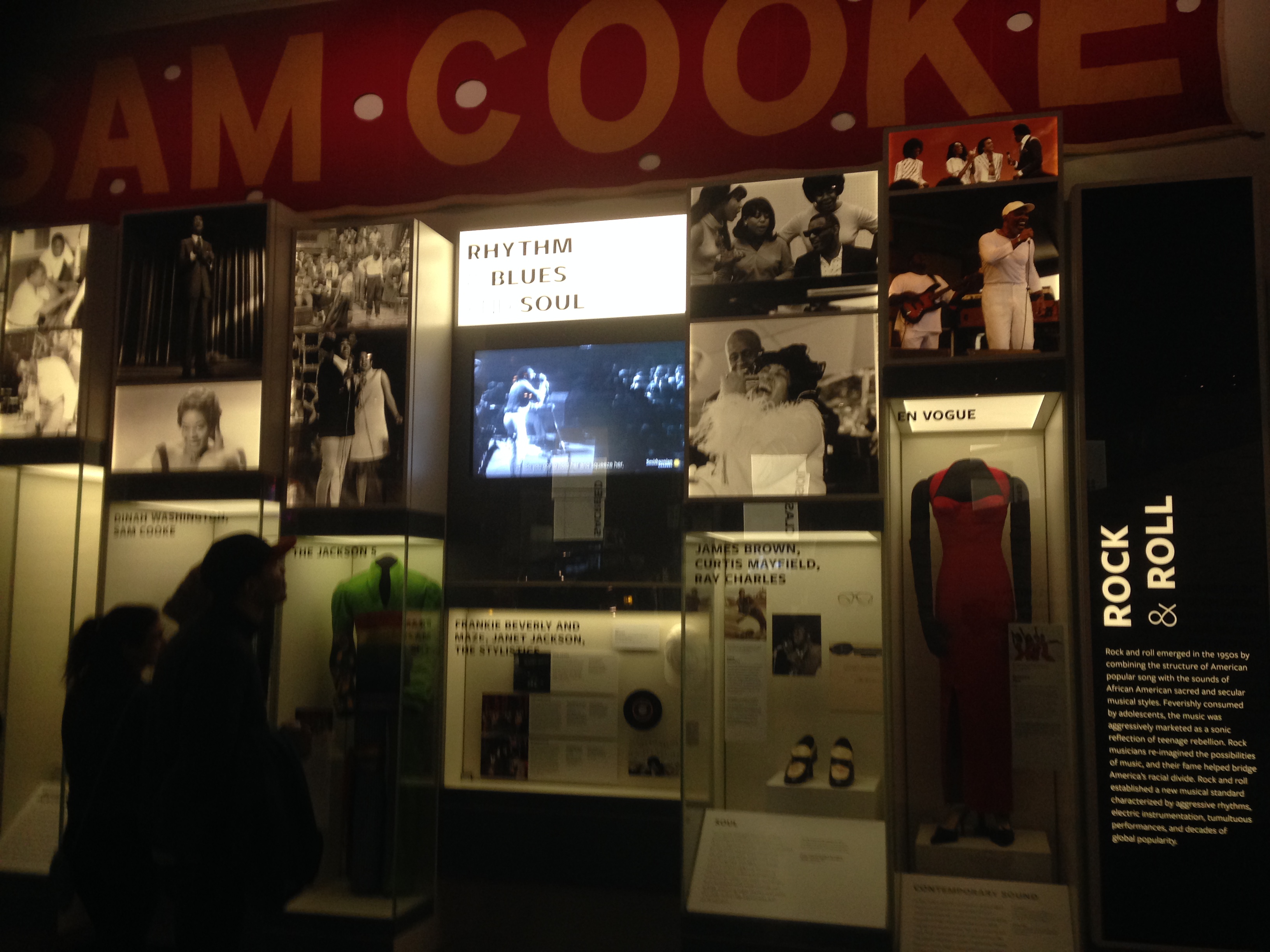
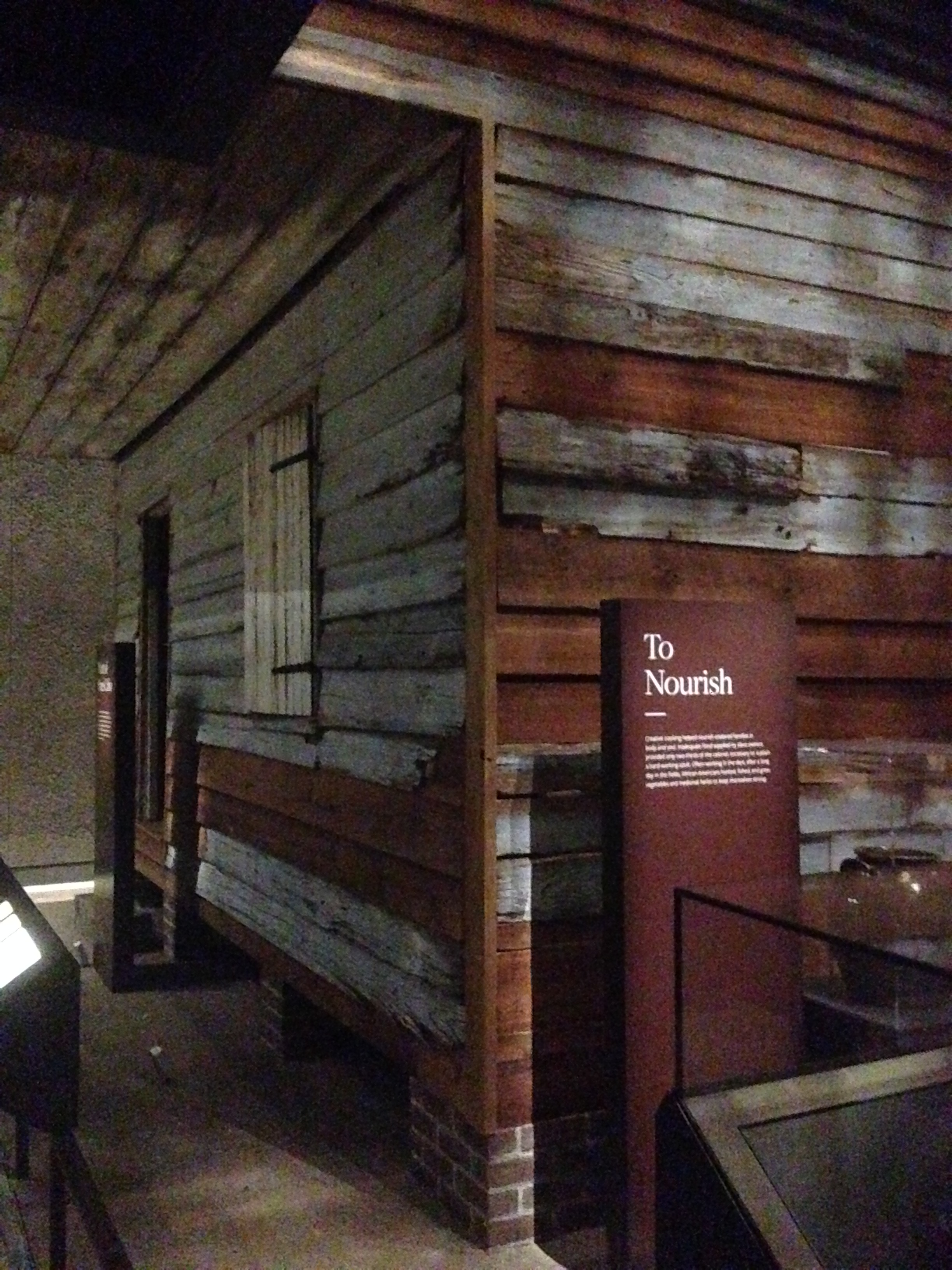
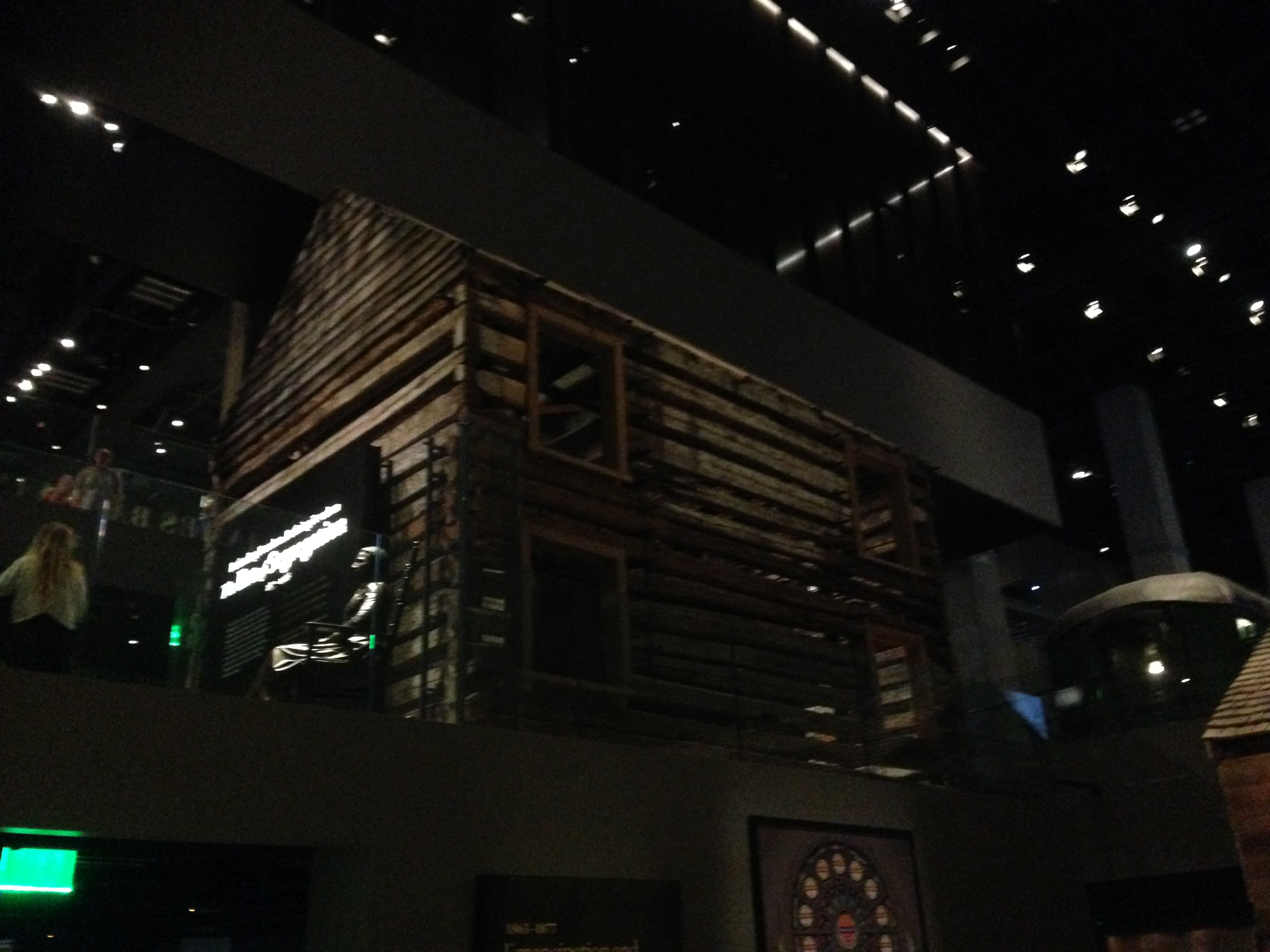
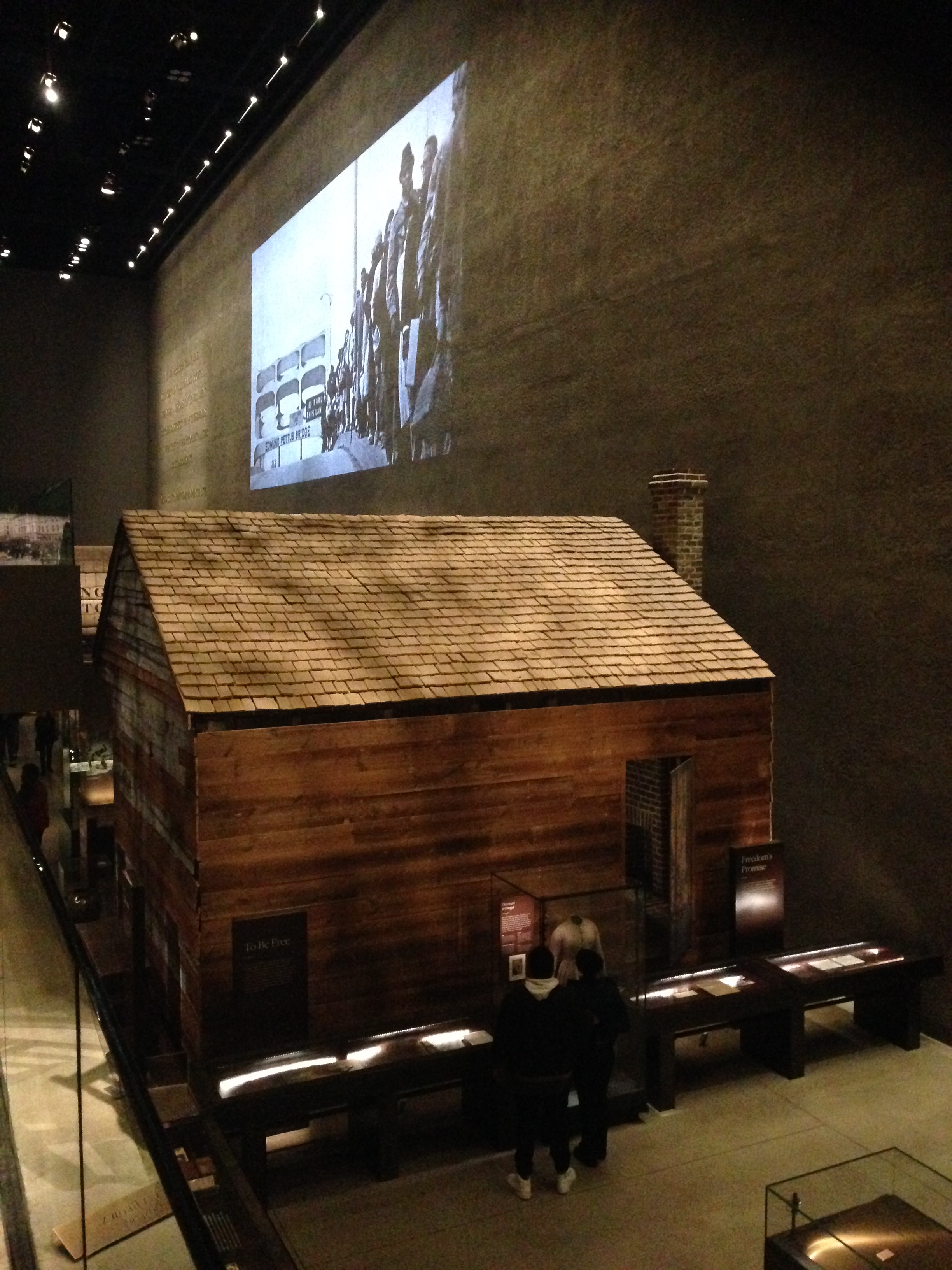

As you make your way up through the three levels, you are met with the symbolism of these people starting from a place of extreme hardship and overcoming challenges while moving onwards and upwards. The galleries were also designed in such a way that visitors must wind their way through the whole exhibition in order to exit- there are no exits/elevators/stairs on each floor, but rather, one long, continuous, winding ramp.
I would also like to note that one of the great strengths of this museum was how they integrated technology into their exhibits in such a way that it was powerful and thought provoking, without being over the top. I especially liked the setup of the virtual recreation of the Greensboro lunch counter. Visitors could sit down at a long lunch counter, made to be reminiscent of the Greensboro lunch counter, and look through documents using digital technology projected on the countertop. On the wall behind the counter was a video projection all about the sit-ins that took place. I felt that this was such an effective way to immerse the visitor in the history.
As for storytelling within a museum, I would say that NMAAHC is one of the best museums that I have been to. I keep thinking back to my day, and the more I think about that place, the more I appreciate what they have done there. It is such a powerful museum, and I recommend it to anyone who hasn’t gone. It’s worth those long wait lines.


Looks like I may have to visit this museum to see what it is all about. You make it look quite interesting.
LikeLike
We should go when you come down here!
LikeLike
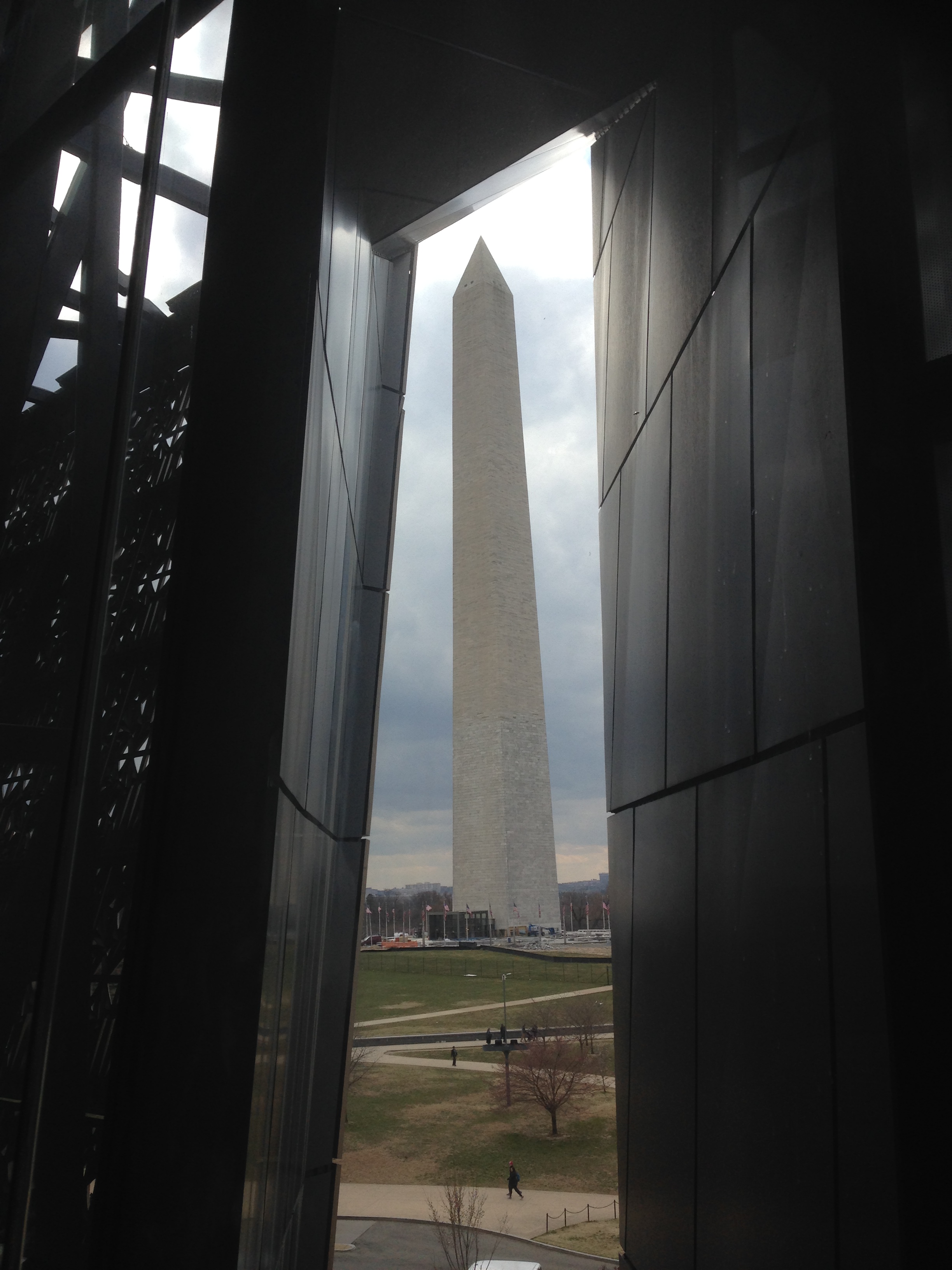
Emily, your photos are terrific, especially the one of the Monument seen from NMAAHC! You had posted earlier about artifacts in museum collections that reflect sexist stereotypes. Did you have time to observe how NMAAHC addresses that issue, especially as it combines with race? It’s such a complicated and layered problem.
LikeLike
To be completely honest, I was so busy taking in everything relating to race that I didn’t even think about how sexism also comes into play. It seems they addressed it well since it didn’t stick out to me. 🙂 I’ll have to keep an eye out at the next museum.
LikeLiked by 1 person